

How to Choose Trusted Football Memorabilia Retailers
Quick Summary
Trusted football memorabilia buyers check three things before paying: the signature itself, the seller's account of where the item came from, and a certificate of authenticity. A genuine signature is fluid and consistent, while a reputable seller can explain how the signing was witnessed. The certificate should name the exact item, each signer and the signing context.
- Genuine signatures are written in a natural, fluid motion with consistent spacing and pressure.
- Vague answers such as trusted sources with no detail are a warning sign.
- A certificate of authenticity should name the item, the signer and the signing context.
- Look for third-party authentication where one is claimed and treat it as a separate check.
- Read reviews for repeated patterns about delivery, packaging and returns rather than single complaints.
Table of Contents
- How to Spot Fake Signed Sports Memorabilia Before You Buy
- What a Football Memorabilia Certificate of Authenticity Should Cover
- Reading Football Memorabilia Retailer Reviews and Choosing Your Next Piece
- Frequently Asked Questions
How to Spot Fake Signed Sports Memorabilia Before You Buy
Start with the item itself. A genuine signature is usually written in a natural, fluid motion, with consistent letter spacing and pressure. Be wary of signatures that look uniformly neat or that seem traced.
Ask the seller where the item came from. A reputable dealer can explain how the signing was witnessed or how the piece was sourced. Vague answers such as "trusted sources" with no detail are a warning sign.
Check the paperwork as well as the signature. A certificate of authenticity is only useful if it names the item, the signer and the signing context. Our own items, including the Bukayo Saka Hand Signed Football, Beckett Authenticated, are sold with a Certificate of Authenticity.
The article points to a few checks that help separate genuine signed pieces from fakes.
| Check | What to look for | Warning sign |
|---|---|---|
| Signature | Natural, fluid motion with consistent spacing and pressure | Uniformly neat or seemingly traced |
| Seller's provenance | Clear explanation of how the signing was witnessed or sourced | Vague answers such as "trusted sources" with no detail |
| Paperwork | Certificate naming the item, the signer and the signing context | No certificate, or one missing these details |
What a Football Memorabilia Certificate of Authenticity Should Cover
A certificate should identify the exact item, name each person who signed it, and state how and where the signing took place. Without those details, the document offers little protection.
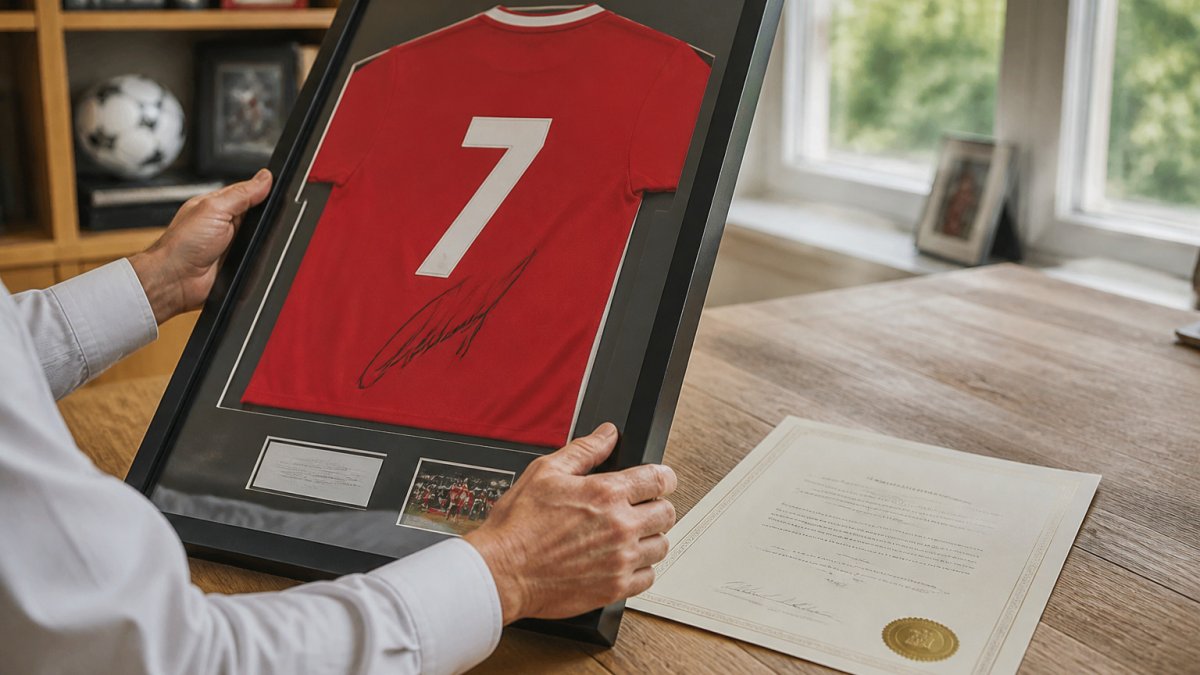
Look for a third-party authentication where one is claimed, and treat an independent authenticator's label as a separate check on the signature.
Bukayo Saka Hand Signed Football, Beckett Authenticated £299 →
Keep your certificate with the item. A signed piece with no paperwork is harder to verify and harder to resell later. Our framed signed shirts and photographs are sold with a Certificate of Authenticity.

Reading Football Memorabilia Retailer Reviews and Choosing Your Next Piece
Read reviews for patterns rather than single complaints. Repeated concerns about delivery, packaging or how returns are handled tell you more than a handful of five-star ratings.
Compare how each retailer answers questions. A seller who explains provenance and shipping clearly is usually easier to trust than one who avoids the detail.
When you are ready to choose, browse our rare signed footballs for sale and check each certificate against the criteria above before you buy.
Frequently Asked Questions
How can I tell whether signed football memorabilia is authentic?
Start with the certificate of authenticity and check that it names the item, the signatories and the signing details. Compare the signature with known genuine examples and look for consistent ink and placement. Ask the seller where the item was sourced, since reputable sellers state whether signatures were obtained directly from the player or from a trusted source. A detailed, traceable paper trail is a stronger guide than the signature alone, and any seller who cannot explain provenance should be treated with caution.
Does signed football memorabilia hold its value?
Some items can appreciate, particularly pieces signed by players who are no longer able to sign or who have passed away, because new signatures cannot be obtained. However, value is never guaranteed and depends on the player, the item, its condition and demand at the time you sell. Treat memorabilia as a collectible you enjoy first, and approach it as an investment only with the understanding that prices can fall as well as rise.
What should I ask a seller before buying signed football memorabilia?
Ask how the signature was obtained, whether a certificate of authenticity is included and who issued it, and what the returns and delivery policy covers if an item arrives damaged. Ask whether the seller is a registered business and how long it has traded. Clear answers to these questions help you judge whether a retailer is trustworthy before you pay.
