

How to Tell Why Authentic Signed Memorabilia Costs More
Last Updated: November 10, 2026
Quick Summary
Authentic signed memorabilia costs more because price tracks signer fame and legacy, how rare the signature is, the item that was signed, its condition and documentation. Authentication adds cost too, since buyers pay for expert checking and proof that the signature is genuine.
- Signer fame, career significance and legacy strongly influence the price of a signature.
- Rarity matters: signers who sign few items create limited supply, raising prices.
- Authentication takes expert examination, documentation, handling and security features, all of which cost money.
- A proper Certificate of Authenticity should name the signer and item, and include a unique reference number.
- Treat signed memorabilia as a collecting decision first; resale fees can erase modest gains.
Table of Contents
- What Drives the Price of Signed Memorabilia
- Why Sports Autograph Authentication Adds Cost
- Reading a Certificate of Authenticity for Signed Memorabilia
- Comparing Authenticated and Unauthenticated Signed Football Memorabilia Value
- Checking Whether a Signed Memorabilia Investment Makes Sense
- Frequently Asked Questions
What Drives the Price of Signed Memorabilia
Signed memorabilia can cost hundreds of pounds, and two lookalike items can be priced very differently. The reason is rarely the ink: price tracks a handful of factors collectors and dealers weigh on every purchase.
The main drivers are:
- Signer fame and legacy
- Rarity and signing frequency
- The item that was signed
- Condition of the item and the signature
- Authentication and documentation
- Demand from collectors
These factors work together: a famous name on a rare item in strong condition costs far more than a common name on a mass-produced item, even if both are genuine.
Signer fame, career significance and legacy
A signature is worth what people want it for. A player who won major trophies, played for a famous club or shaped the sport for a generation commands more than someone with a quieter career. Legacy matters too: players whose reputations have grown since retirement often see signed items rise in value.
Fame alone is not enough, though. A widely known name whose signatures are easy to obtain may sell for less than a lesser-known figure whose autograph is scarce.
Rarity, signing frequency and the item signed
Rarity is where the real price difference usually lives. A signer who has signed few items, or stopped signing altogether, creates limited supply; the more often a player signs, the cheaper each piece tends to be.
The item matters just as much. A signed match-worn shirt, a ball from a famous match or a framed photograph from a landmark moment generally sells for more than a standard print, and collectors pay extra for items with a clear story behind them.
Why Sports Autograph Authentication Adds Cost
Authentication is one of the biggest reasons two items with the same signer can have very different prices. Buyers pay for proof that the signature is genuine, and that proof takes time, expertise and money.
The work behind an authentication fee
A credible authentication is not a single glance at a signature. It is a short chain of checks, and each link costs something:
- Examination by a specialist. Authenticators compare the signature against known exemplars from the same period, often held in reference libraries that take years and money to build.
- Handling and turnaround. Items must be received, logged, stored securely and returned, staff time, insurance and secure storage, not just expertise.
- Documentation. A certificate has to be produced, numbered and matched to the item, with records kept for later checks.
- Security features. Tamper-evident holograms, seals or unique reference numbers cost money to source and apply, and let a buyer link the certificate to the specific item.
- Liability and reputation. An authenticator stakes its name on the opinion, carrying insurance, quality-control and dispute-handling costs a seller without paperwork does not carry.
None of this is visible in the signature itself, but it separates a sale a buyer can trust from one they cannot verify.
What authentication does and does not prove
Authentication is an expert opinion, not a guarantee of origin, and authenticators carry different levels of recognition.
Watch out: an authentication fee is not a valuation. Because authentication only addresses whether a signature is genuine, assessing vintage memorabilia also means weighing its condition and provenance, as illustrated by Liberace Museum Store.
Ask any seller what their authentication includes, who examined the item, what exemplars were used, how the certificate can be checked after purchase, and what happens if a later opinion disagrees.
Reading a Certificate of Authenticity for Signed Memorabilia
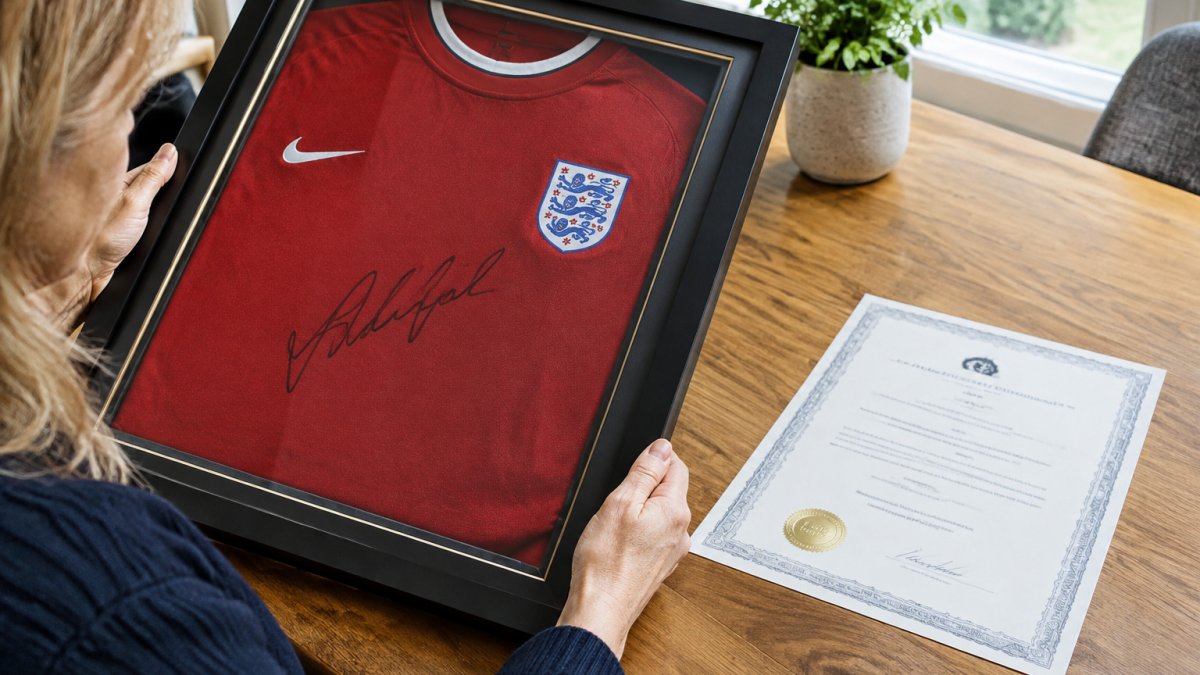
A Certificate of Authenticity (COA) is the document that backs up a signed item. Our guide to why a certificate of authenticity matters for signed memorabilia explains what a proper certificate should contain.
A useful certificate should state:
- The name of the signer and the item signed
- The date the item was signed, where known
- The issuing company and the name of the person who signed off on it
- A unique reference number that links the certificate to the item
- Details of any hologram, seal or other security feature
Be cautious of certificates that are vague, undated or missing a reference number; one that cannot be matched to a specific item proves very little.
Watch out: a COA is only as trustworthy as the company behind it.
Comparing Authenticated and Unauthenticated Signed Football Memorabilia Value
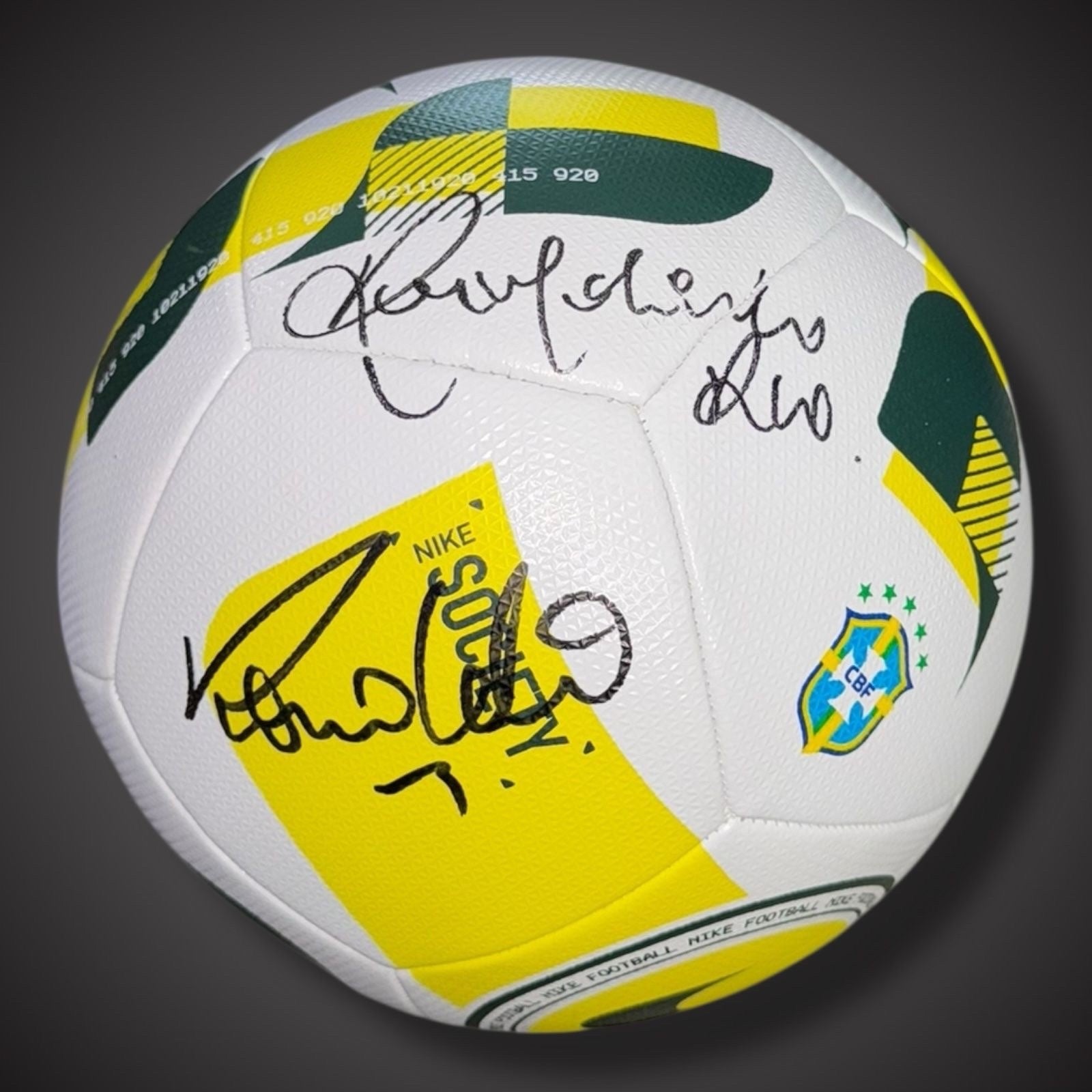
The clearest way to see the value of authentication is to compare the same kind of item with and without it. An authenticated signed football, for example, is usually priced higher than an unverified one, and the gap reflects the risk the buyer no longer carries.
A like-for-like comparison by item type
When you compare listings, hold the signer and the item constant and change only the documentation. The pattern below is a common one across the market; the exact gap varies by signer and by how well known the authenticator is.
| Item type | Unauthenticated | Authenticated |
|---|---|---|
| Signed football | Cheaper asking price, no proof of origin, hard to resell | Higher asking price, documented and independently checked, easier to resell |
| Signed shirt | Often sold as a display piece with no paperwork | Usually supplied with a certificate and a traceable reference |
| Framed photograph or print | Price reflects the print and frame only | Price reflects the print, frame and the verification behind it |
| Match-worn item | Rarely sold without provenance because the story is the value | Provenance and authentication together carry most of the price |
The gap is not a fixed percentage. It widens for signers whose signatures are heavily forged and narrows for those whose autographs are easy to obtain and rarely faked, so a blanket rule such as "authenticated items cost twice as much" is unreliable, the premium tracks the risk being removed.
A practical checklist for weighing the evidence
Before you decide whether an authenticated piece is worth its premium, review the evidence in a fixed order:
- The certificate. Does it name the signer and the item, carry a unique reference number, and match the item in front of you?
- The issuer. Is the authenticator well known and long established, or an unknown name? Recognition matters at resale.
- The security feature. Can the hologram or seal be checked against the certificate, and does the reference number link the two?
- The provenance. Can the seller explain how the item was sourced and when it was signed?
- The seller's record. What is their returns and disputes policy, and how long have they been trading?
Each form of evidence has limits. A certificate proves an opinion was given, not that the signature is beyond doubt; provenance proves a chain of ownership, not necessarily that the signature is genuine. The strongest listings combine several forms of evidence.
The total cost of ownership and resale friction
A lower price is only a bargain if the item can be verified. If it cannot, the apparent saving can disappear the moment you try to sell or insure it.
- Selling fees. Auction houses and specialist sellers take commission, which eats into any gain.
- Insurance and storage. Valuable items need cover and secure storage, both ongoing costs.
- Time to sell. Items without credible documentation sit on the market longer, and some buyers will not consider them at all.
- Authentication on resale. If you buy unauthenticated, you may need to pay for authentication yourself before a buyer will take the item seriously.
Add those costs together and a modest rise in value can be wiped out. For a worked example, the Beckett authenticated signed football is a useful reference point.
Checking Whether a Signed Memorabilia Investment Makes Sense
Signed memorabilia can hold or grow in value, but it is not guaranteed. Treat it as a collecting decision first and an investment second.
Questions to ask before buying:
- Is the signer's reputation likely to grow or fade over time?
- How many examples of this signature are already in circulation?
- Would you still want this item if its value never rose?
- How easy would it be to resell, and what fees would you pay?
Resale friction matters: selling a signed item usually means commission, packaging costs and time, so a modest rise in value can be eaten up quickly.
Our recommendation is to buy pieces you genuinely enjoy and that come with clear documentation. For a broader look, read our guide on whether signed sports memorabilia is worth buying.
If you want to explore the range, you can browse signed sports memorabilia and compare authenticated pieces side by side.
Frequently Asked Questions
Why does authentic signed memorabilia cost more?
Authentic signed memorabilia costs more because the price covers the work behind the signature, not just the item itself. Certificates of Authenticity let a buyer verify the signature. Fame, career significance and the scarcity of a signer's autograph also push prices up. Buyers who compare a heavily discounted item should ask what evidence sits behind the lower price before assuming the two are equivalent.
Does a Certificate of Authenticity guarantee an autograph is genuine?
A Certificate of Authenticity is only as reliable as the company that issues it and the evidence behind it. A good certificate names the signer, describes the item, and is signed by someone accountable for the sale. A certificate on its own is a starting point, and buyers should look for the supporting documentation before treating it as proof.
How should you compare prices for signed football memorabilia?
Compare signed football memorabilia only with items of the same type, signer and signature position. A signed photo, a signed shirt and a signed ball carry different values even from the same player. Look at the authentication method, whether the item is framed, and what the seller includes in the price. Note the date of any comparable sale, because values change as a signer's career and reputation develop. A lower price can reflect weaker documentation rather than better value.
